My Essential Nighttime Curly Hair Routine to Prevent Breakage and Frizz
Think about it – you spend, what, like 6 to 8 hours sleeping? Your hair is rubbing against your pillowcase, getting squished, maybe getting tangled. Cotton pillowcases?
They’re like little moisture thieves, sucking hydration right out of your hair, plus the fibers can catch on your curls, roughing up the cuticle which leads directly to frizz and potential breakage.
So, this nighttime curly hair routine is all about two main things: reducing friction and protecting your curl pattern and moisture levels. It sounds fancy but its actually pretty simple once you find what works for you.
Step 1: Ensure Your Hair is Fully Dry
This is kinda a big one. Going to bed with wet or even damp curly hair is generally not the best idea. Wet hair is weaker and more elastic, making it way more susceptible to stretching out of shape or even breaking under tension or friction overnight.
Plus, trapping moisture against your scalp all night isn’t great for scalp health either. Aim to have your hair 100% dry before you start your nighttime prep. If you wash at night, make sure you allow ample drying time or diffuse it fully.
Step 2: The Optional Moisture Touch-Up (Listen to Your Hair)
Most nights, you probably won’t need to add anything. But if your ends feel particularly dry or you know you’re prone to overnight dryness, this can be a helpful step.
- Tiny Bit of Oil: Take literally 1-2 drops of a lightweight hair oil (like argan, jojoba, or grapeseed). Rub it between your palms to warm it up.
- Seal the Ends: Gently scrunch or glaze the oil only onto the very ends of your hair. The ends are the oldest and often driest part, this just gives them a little extra protection.
- Or a Touch of Leave-in: Alternatively, a tiny spritz of watery leave-in conditioner focused on the ends can work too.
- Avoid Overdoing It: Really, less is more here. Too much product added at night can lead to buildup or weigh your hair down for your morning refresh.
Step 3: Choose Your Protective Style (The Main Event!)
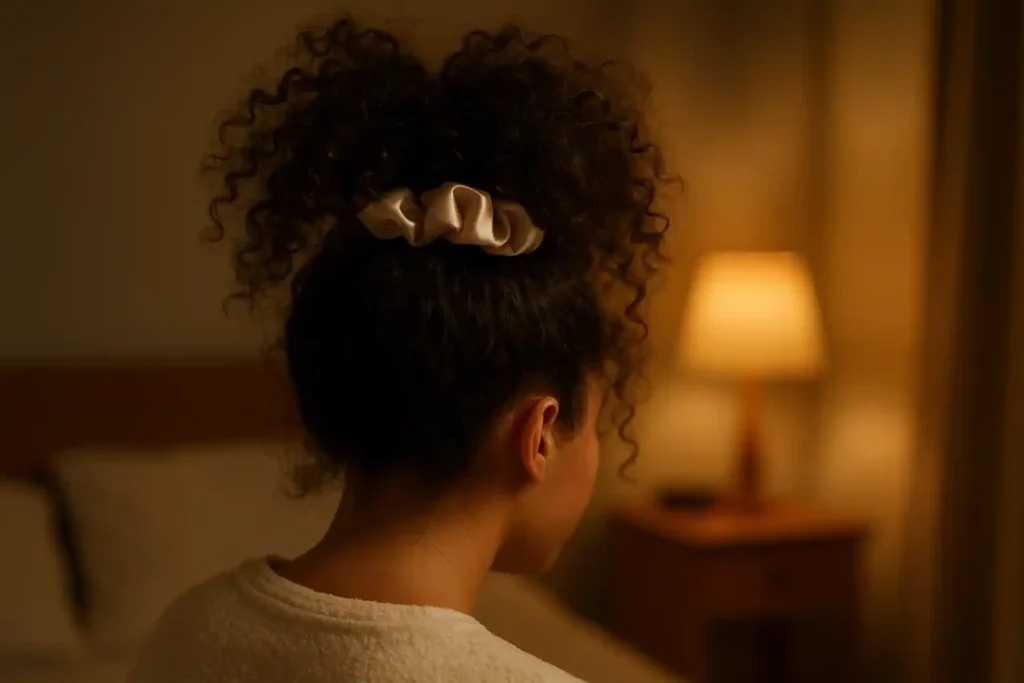
This is where you physically protect your curls from getting crushed and tangled. The goal is to keep your curls contained but not constricted too tightly. Here are the most popular and effective options:
A. The Pineapple:
This is probably the most well-known nighttime style for curlies.
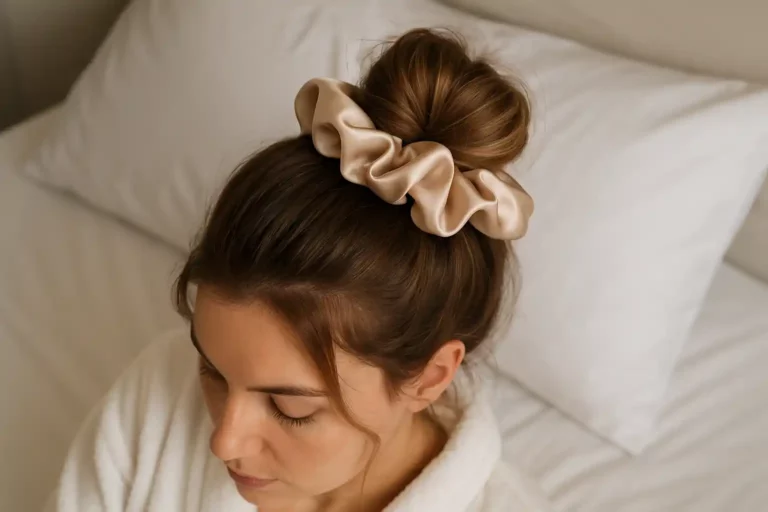
- What it is: You gather all your hair very loosely into a ponytail right on the very top of your head (like, near your forehead hairline). Secure it with a soft scrunchie (preferably silk or satin) or an Invisibobble-type coil tie. Don’t wrap it super tight! The goal is just to keep the lengths of your hair up and off your neck and pillow.
- Pros: Great for preserving volume at the roots, keeps lengths relatively undisturbed, super quick and easy. Works well for medium to long hair.
- Cons: Can sometimes stretch out the curls near the base of the ponytail slightly. Might not work well for shorter hair (see next option!). Might look kinda silly, but who cares, its bedtime!
B. The Multi-Pineapple or Mini Buns:
If your hair is shorter or you find one pineapple stretches your curls too much, try this.
- What it is: Instead of one high pony, create 2, 3, or even 4 smaller, loose ponytails or loose mini buns sectioned across your head. Secure each loosely with soft scrunchies.
- Pros: Better for shorter hair that can’t reach one central pineapple. Less stretching of the curl pattern compared to a single pineapple. Still keeps hair contained.
- Cons: Takes slightly longer than one pineapple. You might feel the multiple scrunchies a bit more.
C. Loose Braid(s):
This can be a great option, especially for wavy types or those with looser curls who don’t mind a slightly altered pattern.
- What it is: Gently gather your hair into one or two loose braids. Secure the end(s) with a soft scrunchie. Don’t braid tightly down to the scalp like you’re trying to win an award; keep it relaxed.
- Pros: Excellent at preventing tangles. Can create a nice, uniform wave pattern for the next day (if you like that look). Less likely to cause root volume loss than a pineapple.
- Cons: Will definitely alter your natural curl pattern into more of a wave. Might not protect tightly coiled curl patterns as well as a pineapple.
D. The Buff/Scarf Tuck:
Sometimes used with a pineapple or braid, or on its own for shorter hair.
- What it is: You can use a Buff (those stretchy fabric tubes) or a large silk/satin scarf. For a Buff, just pull it over your head like a headband, then pull the tube part down over your loose hair to gently contain it. For a scarf, you can loosely tie it around your hair (lots of tutorials online!).
- Pros: Fully encases the hair, providing great friction protection. Good for keeping shorter pieces contained.
- Cons: Can sometimes flatten roots depending on how you wear it. Finding a scarf that stays on all night can take practice.
Step 4: Upgrade Your Pillowcase (Or Wear Protection)

This step works hand-in-hand with your protective style. Even with a pineapple, if you’re rolling around on cotton, you’re still gonna get some friction.
- Silk or Satin Pillowcase: This is like, the golden rule. Both silk (a natural protein fiber) and satin (a type of smooth weave, often polyester) provide a slippery surface. Your hair glides over it instead of catching. This means way less frizz and breakage. They also dont absorb as much moisture from your hair as cotton does. Its a worthy investment!
- Satin Bonnet or Scarf: If you dont want to splurge on pillowcases (or travel a lot), wearing a satin bonnet or tying your hair up in a silk/satin scarf achieves the same goal. It creates that protective barrier between your hair and whatever surface it touches. Make sure it fits comfortably – not too tight!
Step 5: The Gentle Morning Take-Down
In the morning, gently remove whatever protective style you used (scarf, bonnet, scrunchie). Don’t just rip it out! Let your hair settle for a minute or two. Shake your roots out gently with your fingertips (head upside down is great for reviving volume).
Then, assess the situation and proceed with your refresh routine as needed (like we talked about in the How to Refresh 2nd and 3rd Day Curls Without Washing article!).
You’ll likely find you need to do way less refreshing because your curls started the day in much better shape thanks to your nighttime curly hair routine.
Why Consistency Matters
Doing this routine sometimes is better than nothing, sure. But doing it every single night? That’s where you’ll see the real, cumulative benefits. Less frizz day after day, hair that feels softer and more moisturized, fewer annoying tangles, and most importantly, minimizing that friction means less breakage over time.
This contributes massively to retaining length if you’re trying to grow your hair out and just generally keeping your curls healthy and strong, making those Weekly Deep Conditioning Routines even more effective.
It might take a few nights to find the exact combination of protective style and head covering/pillowcase that feels comfy and works best for your specific curls, but stick with it! Your hair will seriously thank you for it. This isn’t about adding a ton of time to your evening; it’s about making a small, smart change that pays off big time while you sleep.
Frequently Asked Questions (FAQ)
Q1: Will sleeping in a pineapple stretch out my curls permanently?
A: Nope, not permanently! It might temporarily loosen the curl pattern where the scrunchie sits, but a quick mist of water and a scrunch in the morning usually brings it right back. Using a soft scrunchie and keeping it loose helps minimize this.
Q2: Is a silk pillowcase better than a satin bonnet (or vice-versa)?
A: Both are excellent choices because they offer that crucial slip! Silk is a natural fiber and often more breathable, while satin (usually polyester) is more budget-friendly. Many people use both (e.g., pineapple + bonnet, or just a pillowcase if their style stays put). It often comes down to personal preference and what stays on your head comfortably all night.
Q3: My hair is too short for a pineapple or braid! What should I do?
A: A satin bonnet or scarf is your best friend here! You can just gently tuck your short curls inside without trying to put them up. Alternatively, just sleeping on a silk/satin pillowcase without putting your hair up will still offer significant protection compared to cotton.
Q4: Can I put styling products in my hair before bed?
A: It’s generally better to keep nighttime product application minimal to avoid buildup and weighing hair down. If you do add anything (like the tiny bit of oil mentioned), make sure it’s very light. Your main styling products should ideally be applied during your wash day or refresh routine.